How to Find a Water Leak
Here is how to find a water leak at home: read the meter with the whole place shut down, hunt through the rooms one at a time, then finish outside at the taps, the tank and the ground. A dial that keeps turning while nothing runs means water is escaping somewhere on the property.
If we're late, $100 comes off your bill

- Licensed and InsuredEvery job done by a licensed plumber. QBCC No: 15024607
- Fixed Quote FirstFlat-rate pricing, agreed before any work starts
- Lifetime Labour WarrantyBacked by our Fix-It-or-It's-Free guarantee (T&Cs apply)
- $0 Call-Out FeesNo extra charge for nights, weekends or public holidays
The meter only counts water drawn through it, so that dial is the one honest witness in the house. Photograph it, leave the place alone for a while, then photograph it again.
Plenty of Bardon homes date from the interwar years and stand on stumps, with galvanised supply lines still running under the floors. Those pipes rust from the inside, and when a thread finally gives way, water pours into the underfloor space where nobody looks.
Rule a Leak In or Out at the Meter
Run the check in one line: every outlet and appliance off, one meter reading, a quiet hour or more with nothing drawing water, then a second reading. Movement between the two photographs is the verdict, and a licensed plumber takes it from there.
The full test, in order:
- Close every outlet and switch off every water-drawing appliance: the taps, the hose, the washing machine, the plumbed-in fridge, the dishwasher and any irrigation. The stop tap at the meter itself stays open.
- Snap a photo of the dial, red digits included. Those red wheels register the smallest draw and catch a slow weep the main digits miss.
- Leave everything untouched for an hour at least. No showers, no flushes, no ice maker topping up overnight.
- Compare the photos. A different number means water is getting out.
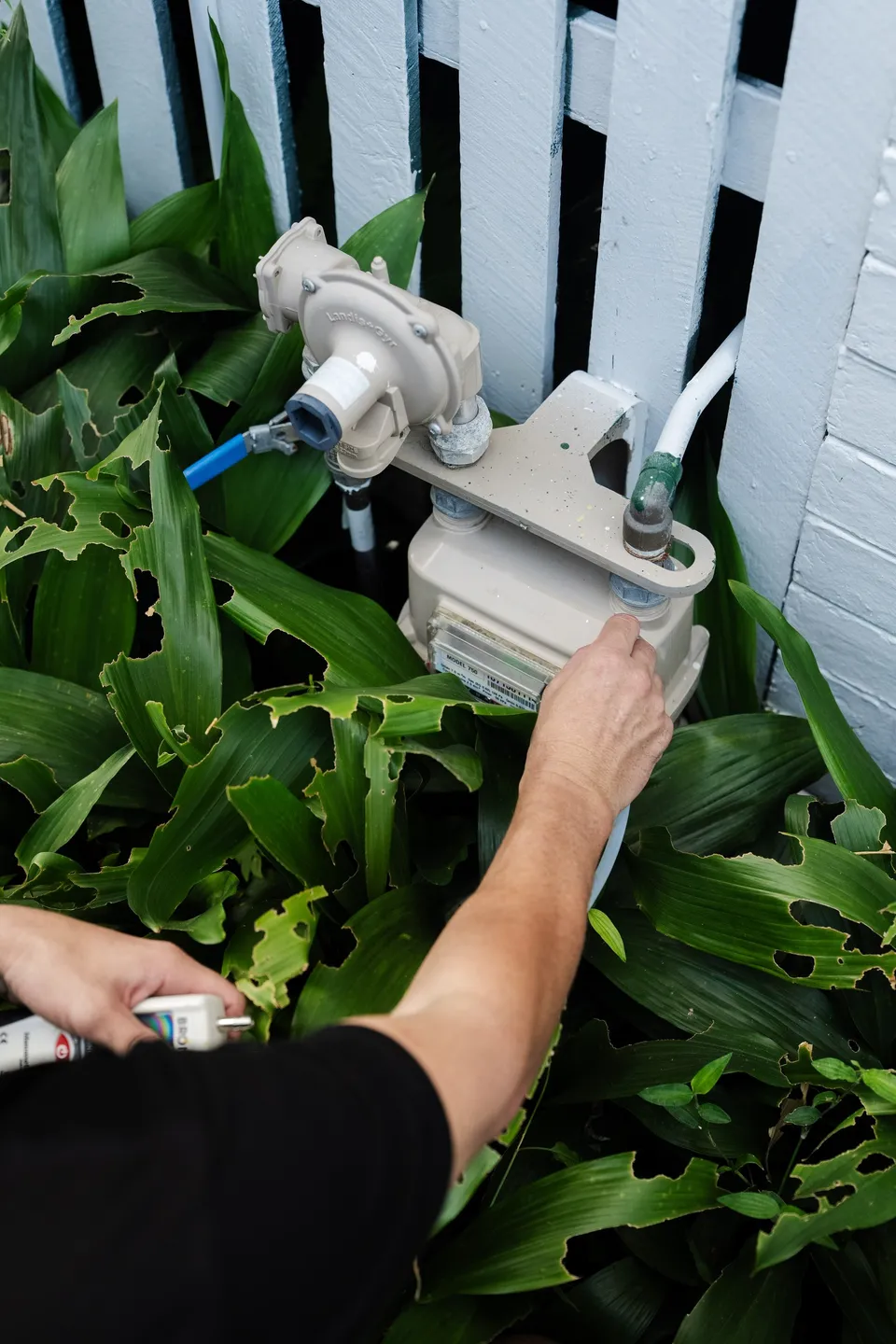
Your meter sits under a small lid near the front boundary, set into the ground on the council strip beside the road. Lift the cover and the numbers run along the face.
One caution worth keeping: the water utility watches accounts for odd spikes and contacts customers where it can. That program is a backstop, not a leak alarm, so read your own dial rather than waiting for a letter.
Room by Room Inside the House
Work through the house in this order: toilet cisterns first, then taps and showers, then plumbed-in appliances, then the walls, ceilings and floors.
Toilets
squeeze a little food colouring into the cistern and leave the loo unflushed. Colour reaching the pan after a wait means the cistern is passing water past its seal. Flush it clean afterwards, because ceramic will not hold the tint.
Taps, showers and appliances
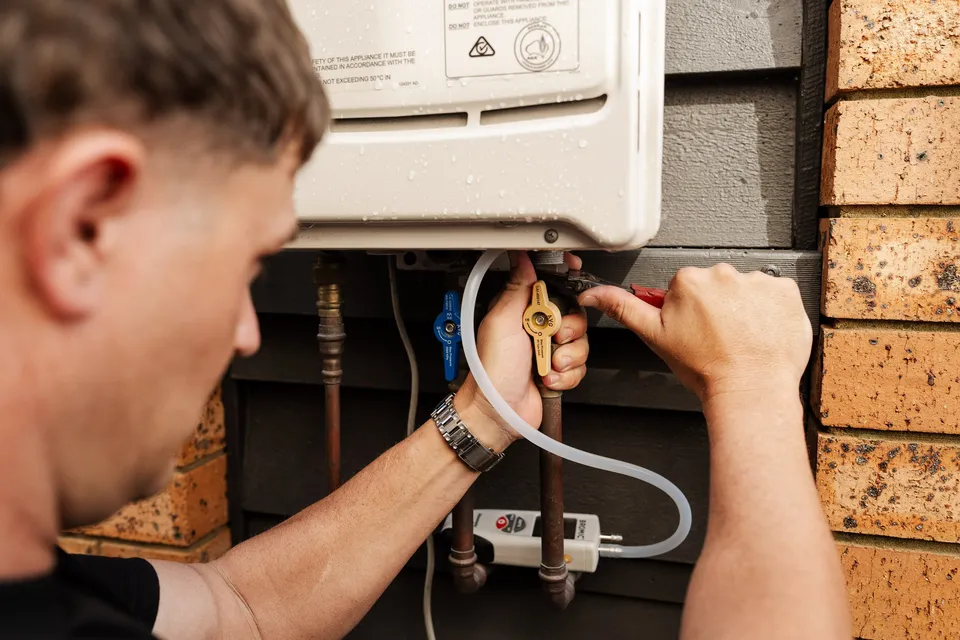
confirm every spout is fully closed and not dripping, and look over the plumbed-in fridge and the hot water unit for weeping joints.
Walls, ceilings and floors
damp patches, a musty smell, swollen or peeling finishes and a warm spot underfoot are the classic signs of water escaping where you cannot see it.
The steep side streets add a tell of their own. Water escaping under a floor follows the fall of the block, so a hidden leak often shows as a stain at the low end of a wall before it shows anywhere else.
What the Search Tells You
A drip found at a tap or cistern probably closes the case; a dial that keeps turning with nothing found means water escapes unseen. Concealed leaks tuck themselves into three spots: below the lawn, under a concrete drive, or inside a wall cavity. Any of them can drain thousands of litres a day while the house stays quiet.
Tracing one is work for a licensed plumber, and our leak detection page explains how that half of the hunt runs.
Ownership stays simple. Every pipe past the meter belongs to the property, and its owner maintains it, concealed leaks included. Urban Utilities keeps the public mains and the sewer, and the house side of that line is the owner's.
The QBCC calls a repair on a split or failing pipe minor work: a licensee does the job, with no permit and no Form 4.
Taps, Tanks and Wet Ground Outside
Out in the yard, work in this order: the garden taps, the hose fittings, any rainwater tank, then the ground itself.
Garden taps
one slow drip at an outdoor tap or hose fitting can send thousands of litres down the drain over a season, and the washer takes minutes to swap.
Rainwater tanks
if your tank tops up from town water, make sure it is not topping up non-stop. A failed solenoid or internal part keeps drawing mains water, and a licensed plumber tests and replaces those.
The ground
a patch of lawn that stays soggy, goes spongy or grows greener than everything around it, plus paving that lifts unevenly, points to a pipe weeping below.
If the place has a pool, one bucket settles the question. Stand a bucket filled from the pool on a step so the level inside matches the pool, mark both levels, then leave the pool untouched for a day. If the pool has fallen further than the bucket, water is escaping; if the two drops match, it is only evaporation.
When to Ring a Licensed Plumber
Ring (07) 3524 7163 once the dial moves and your hunt through the house finds nothing. The same call covers these signs:
- a bill that jumps without any change in your habits
- damp, stains or a musty smell spreading through a room
- soggy ground or a green patch that no watering explains
Local Bardon Plumbing works across Bardon and the suburbs around it. Bring both meter photographs to the call, because they tell a plumber where to start.
Questions to Ask Before You Call
Call (07) 3524 7163How do I track down a hidden water leak at home in Bardon?
Begin outdoors at the meter with nothing running, then move inside through the cisterns, spouts and appliances, and finish in the yard at the garden tap, the tank and any wet patch of lawn. Whatever survives that hunt, a licensed plumber runs it to ground.
My water meter moves but I can't find a leak. What now?
Then the escape is concealed: below the lawn, under a concrete drive, or behind a wall lining. A licensed plumber isolates each pipe run in turn and pressure-tests to narrow the spot. Our leak detection page covers that half of the job.
Who is responsible for a hidden leak in Bardon?
You, as the property owner. The pipes on your side of the meter are yours to maintain, concealed ones included. Urban Utilities keeps the street mains and the sewer.
Can I fix a hidden water leak myself?
Not the pipe. Queensland's regulator classes that repair as minor work for a licensee, needing neither a permit nor a Form 4. What stays open to a capable owner is the short unregulated list: a tap's jumper valve or washer, cistern washers, shower heads and filter cartridges.

Ring Us Before the Leak Costs MoreWe'll call you back.
Ring (07) 3524 7163 and tell us what's wrong. You get $0 call-out fees, a fixed quote before any work starts and same-day where we can, 7 days a week.
To claim your $0 call-out fee, call (07) 3524 7163 today.